


For local SEO, link building and backlinks are an important piece of ranking your business on Google Search, AI/LLMs, while having a less direct impact on Google Maps.
However, getting quality backlinks is difficult, time consuming, and often expensive.
That’s because after optimization, backlinks are what separates those that rank from those who don’t.
With that, let’s get deeper into backlinks, how they work, and strategies for acquiring more of them.
Local SEO — Backlinks, Authority, & PageRank
First, let’s go through some basics around backlinks and authority.
The original idea behind Google’s search engine results page, or SERPs, formula is called “PageRank.”
Through the last decade, Google has tried its best to minimize PageRank and its importance in search engine results. However, the truth is, when it comes to determining page authority and minimizing search manipulation, nothing works better than the original PageRank algorithm—with a few slight changes.
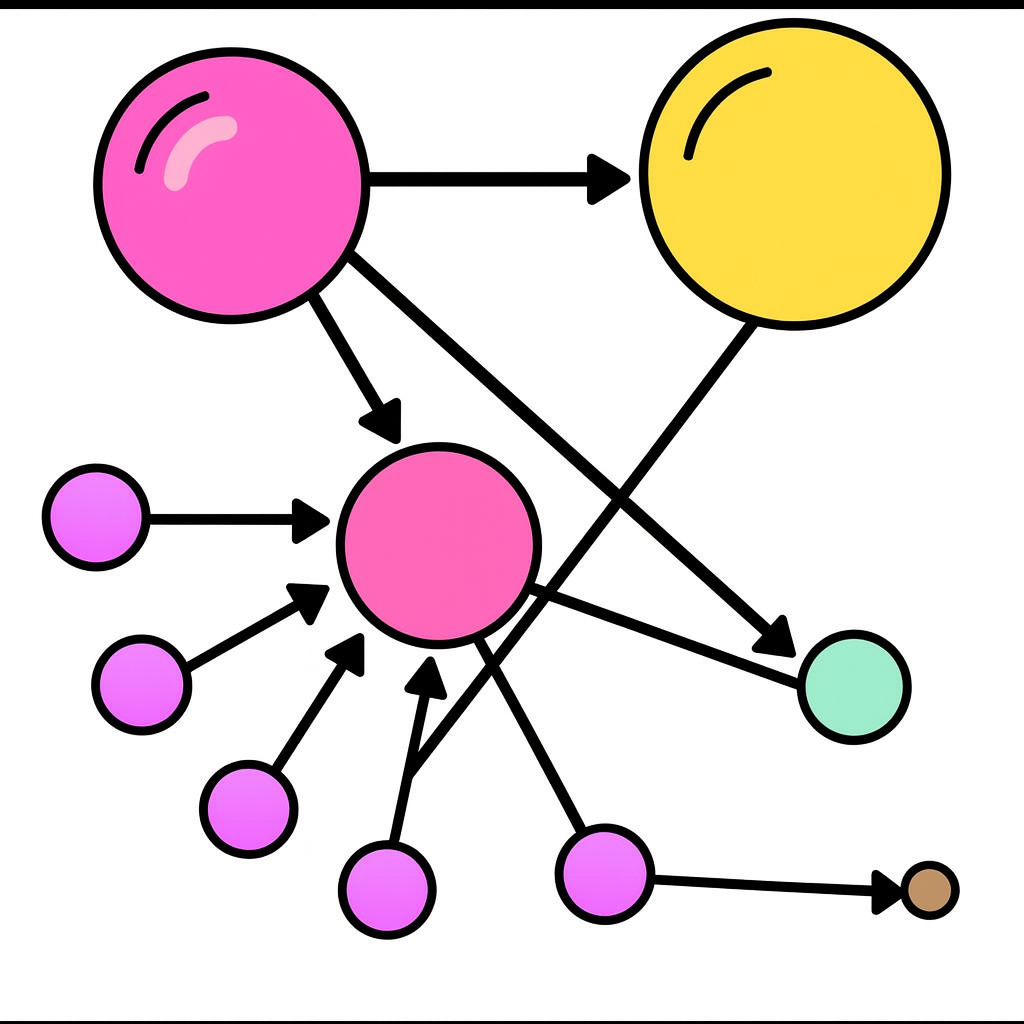
The idea isn’t too difficult to understand. Pages pass authority via links.
Every page is judged by the backlinks that point to it. Then, it gets an authority, or PageRank, score based on those links.
But this is important to note—PageRank is a metric specific to each page on your website. This is why internal linking is so important for website optimization. Each page is ranked individually and it’s best to approach each page on your website through that lens.
The content and context on your page also matter for ranking—that’s why a page on “roofing” won’t rank for “plumbing” searches.
But all things being equal, PageRank is what separates pages in the top search results from others.
Location of Backlinks
However, PageRank is not all that matters for local businesses. There is also a geographical component to local backlinks that are important as a local search ranking factor.
Google understands that many businesses are local. And it can determine which websites have more “local authority” based on many different factors.
For example, the “Wall-Street Journal” may have a high overall authority, but a business in Denver may get an outsized local search benefit from “The Denver Post”—or other local websites.
The type of website doesn’t matter: New outlets, businesses, associations, etc. What matters is finding high-authority, geographically-focused backlinks opportunities to improve your search results.
Debunking SEO Tools
Now, we run into a problem here. Google does not share what the internal PageRank score is for your website pages.
Because of this, tools like Ahrefs and Semrush have moved in to fill this knowledge gap.
Personally, I love these tools, and I use them myself—they are invaluable for specific tasks and research.
But they do a bad job if you’re looking to determine your PageRank score, or local authority, and find the exact reasons you do, or do not, rank well on Google.
In many cases, this causes confusion and makes it difficult for businesses and SEOs to understand how to rank pages effectively.
That’s why the best tool is always Google itself. If you’re pages are optimized, and you aren’t ranking, then continue to build backlinks to those pages.
Overtime, by building quality backlinks, you will find your pages moving up in the search results.
It really is that simple.
Traffic: A Useful Metric
When measuring authority and the impact of backlinks on your website, traffic can be used to offer insight into what’s actually working.
All that Google cares about is customers and traffic. In fact, PageRank is simply an authority metric based on the flow of customer traffic to links on a webpage.
Pages that don’t get any traffic, Google is likely ignoring, because it doesn’t matter to customers. And if it doesn’t matter to customers, and it doesn’t get traffic, then it won’t pass any authority.
This is why web 2.0 links, backlink packages, guest posts, and dead-end local directories offer no search value to your website.
They don’t get traffic, so they don’t pass authority.
This wasn’t always the case—but in 2011-2012, Google’s Panda and Penguin updates took these low-quality backlinks and set their value to zero.
Buying Backlinks Doesn’t Work
For business owners that are unfamiliar with SEO history, this can be a confusing concept. How can something be worth zero? A package of 250 backlinks must have some positive benefit?
But this is not the case. Google can see when a website has thousands of outgoing links on thousands of blog posts that get absolutely zero traffic.
Not only do these links not benefit you, but you may also be putting your business at risk of a manual penalty—the worst penalty a business can receive—which can remove your business from search completely for month, years, or even forever.
This is why buying backlinks, no matter how high the “quality,” is just not worth it. The risk to your business is too high.
And in almost every scenario mentioned above, the amount of traffic that these backlinks get, is zero every time. These pages aren’t created to get traffic, they are created for the customer buying the backlinks.
By judging backlinks based on traffic, you weed out all of the noise. When you see a competitor outranking you with 1,000 backlinks, but none of those backlinks get traffic, you may discover that one or two quality backlinks helps you outrank competitors much easier than you thought.
Quality (Local) Backlinks Are Expensive
Now that you understand how many backlinks are simply worthless, you start to see why quality backlinks are so difficult to acquire.
If you need backlinks from real, active websites, that aren’t available through direct purchase, then you’ll need a strategy that creates enough value to convince a business owner to go out of their way to take action.
Not only that, but you need to focus your strategy in your local area, which may make things go from difficult, to near impossible.
That means, you need to offer something so valuable, or create something so compelling, that it gets you the results you want from your efforts.
We’ll discuss some of the best strategies for doing this in a minute, but what matters here is that you understand this—good backlinks take time and effort. And most people will not expend the time, resources, and brain power to get the desired results.
Backlinks & Effectiveness
However, this may sound negative—but here’s why this is great news. Because with this lens, you can see why it only takes a few high-quality, local backlinks can move you to the top of Google Search very quickly.
In fact, just the other day I was looking at the rankings for a Tattoo business in Florida. He was ranking #1 for almost every search term.
The reason? He had been put on a list of the top 10 local businesses in his area from a prominent news outlet.
It took the owner a lot of work and community involvement to get that link, but that one link was responsible for him now getting thousands and thousands of customers from Google Search for potentially years.
It doesn’t take a lot to move the needle.
Backlinks and Google Search Engines
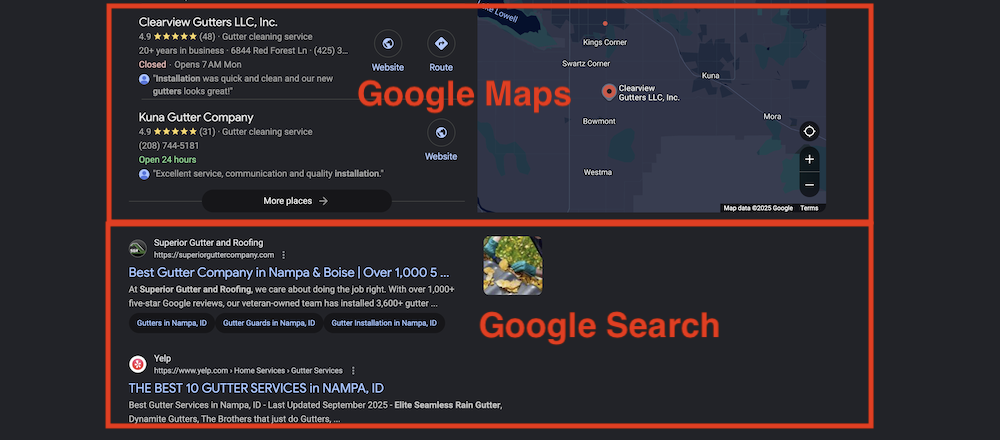
Once you understand how backlinks work, and how to more accurately judge quality, let’s move on to exactly where backlinks impact your rankings.
This is where people tend to get lost, because backlinks are not universally applicable.
Google can be broken down into three distinct search engines, each with their own algorithms.
- Google Search: Standard text links (blue links), typically below sponsored ads and the local map pack listings.
- Google AI Search: Compilation of multiple “similar” Google Search results and Google Maps (for local searches).
- Google Maps & Local Pack: Map results shown at the top of the Google Search results or when searching on Google Maps specifically.
SEO is all about having a goal, and working to achieve it. If you have a goal, but take the wrong steps to achieving that goal, that leads to frustration and confusion.
That’s why it’s important to understand how backlinks affect each search algorithm, independently, if you want to maximize your rankings potential for one or more local SERPs.
Google Search
Google Search refers to the traditional blue link, text-based Google search results.
Depending on the keywords used, searchers may see national, local, or a mix of both—which is important to note.
Because these results operate primarily off of the PageRank algorithm and local authority, backlinks will have a direct impact on where pages on your website will rank.
AI/LLMs
Ai tools are another important avenue to consider when creating backlinks and looking to improve results.
Currently, AI/LLM tools simply take the original search text and run multiple “similar” searches, and give the user a breakdown based on these results.
Google AI, ChatGPT, and many others simply use Google Search to gather the necessary information, while occasionally including Google Maps in the process.
Backlinks are important for Google Search, which makes them important for ranking higher on AI/LLM tools as well.
However, ranking on Google Maps is also helpful for ranking on AI/LLM searches—especially for local businesses SEO.
Google Maps
As a local SEO ranking factor for Google Maps, backlinks are much less important compared to Google Search.
That’s because Google Maps already has its own unique way of measuring authority and trust to determine rankings—reviews.
Reviews are essentially backlinks for Google Maps. They drive authority, rankings, and there are many factors—similar to backlinks—that play into how powerful each review is for a business.
Let me be clear, backlinks, and local backlinks, do have an impact on Google Maps rankings. However, as someone who relieves heavily on the “October Method” for local SEO, and the 80/20 rule, data suggests backlinks are not a primary driver of Google Maps rankings.
This should be taken into consideration when building a strategy around, and measuring results for, ranking on Google Maps specifically.
How to Build Backlinks for Local SEO

Getting backlinks can be difficult, as stated before. However, with some creativity, and a bit effort, you can find a strategy that works to help your business get consistent, quality backlinks to improve Google rankings.
Let’s look at some of the most effective strategies for building backlinks for your local business.
Not all of these will be localized strategies. And sometimes you have no control over where a backlink comes from. But as long as the backlink is from a quality source and the anchor text is related to your business, you’re going to see a benefit.
Press, News, and HARO
By far one of the most effective backlink strategies is using the press and services like HARO (Help a Reporter Out).
With HARO, you simply get an email every day with questions from reporters looking for sources. You can sift through and find questions related to your expertise, and then send in your responses. If they like what you have to say, they will include it in their content, typically with a backlink.
This may take some effort before you find success, but these can be some of the most powerful, high-quality backlinks for your business.
On top of this, any strategy that utilizes press can be effective—especially local press. Strong press releases, contacting journalists, getting involved in your community, and any strategy for that gets attention from local news outlets are all highly effective for acquiring backlinks.
Informative or Interesting Link Bait
The link bait strategy involves creating some form of unique, informative, or interesting content that makes people want to reference or link to it as a source.
This can be a calculator, free application, research study, unique data, graphics—anything that offers value.
If people like it enough to link to it, and it’s on your website, you’re likely to benefit.
It’s not always as easy as it sounds, but if you can hit a home run with this kind of content, it’s worth the effort.
However, this typically doesn’t start without a push. Outreaching to websites that may want to link to you, or using social media to spread the message, can help you get the ball rolling and add momentum to your website content.
Broken Link Building
Broken link building is another simple and effective strategy.
Using a tool like Ahrefs, you can comb through specific websites you want to get a link from.
There you can find website backlinks that go to unrelated, broken, or “404” pages.
You simply send them an email, let them know there is a broken link, and then tell them you have a resource on your website so they can update that link to point to you.
It’s simple, helpful, and can be a very effective method for building links.
Local Outreach
Lastly, I’ll mention local outreach. This could contain many different strategies, which all fall under the same umbrella.
Many approaches can work here, but the idea is simply this: reach out to local businesses and look for ways to get backlinks from them.
This could be anything from:
- Asking for backlinks from customers or partner websites
- Writing guest post content for local blogs
- Offering link exchanges from non-competitor websites in similar industries
- Creating round-robin link building groups with multiple business owners
- Starting secondary projects with business owners in your local area
- Work with other adjacent businesses to fund community events or other PR strategies
It’s important to note that a link exchange—where you link to a website, and that website links to you—is not ideal, and may not have any positive impact on Google rankings. So, avoid this if possible.
But, if that’s the only option, it may be better than nothing.
Backlinks for Local SEO
With a deeper knowledge of local SEO, backlinks, and strategies, you’re ready to go out there and outrank the competition.
It always comes down to people, and customers. Google simply wants to show what matters, backlinks are how they measure that.
And getting backlinks typically comes from offering value to real people. If you keep that framework in mind, it’s hard to lose.
Now that you understand backlinks, it’s time to move to our next lesson in our local SEO guide:
Understanding Google reviews, and how to make them more impactful for your business.